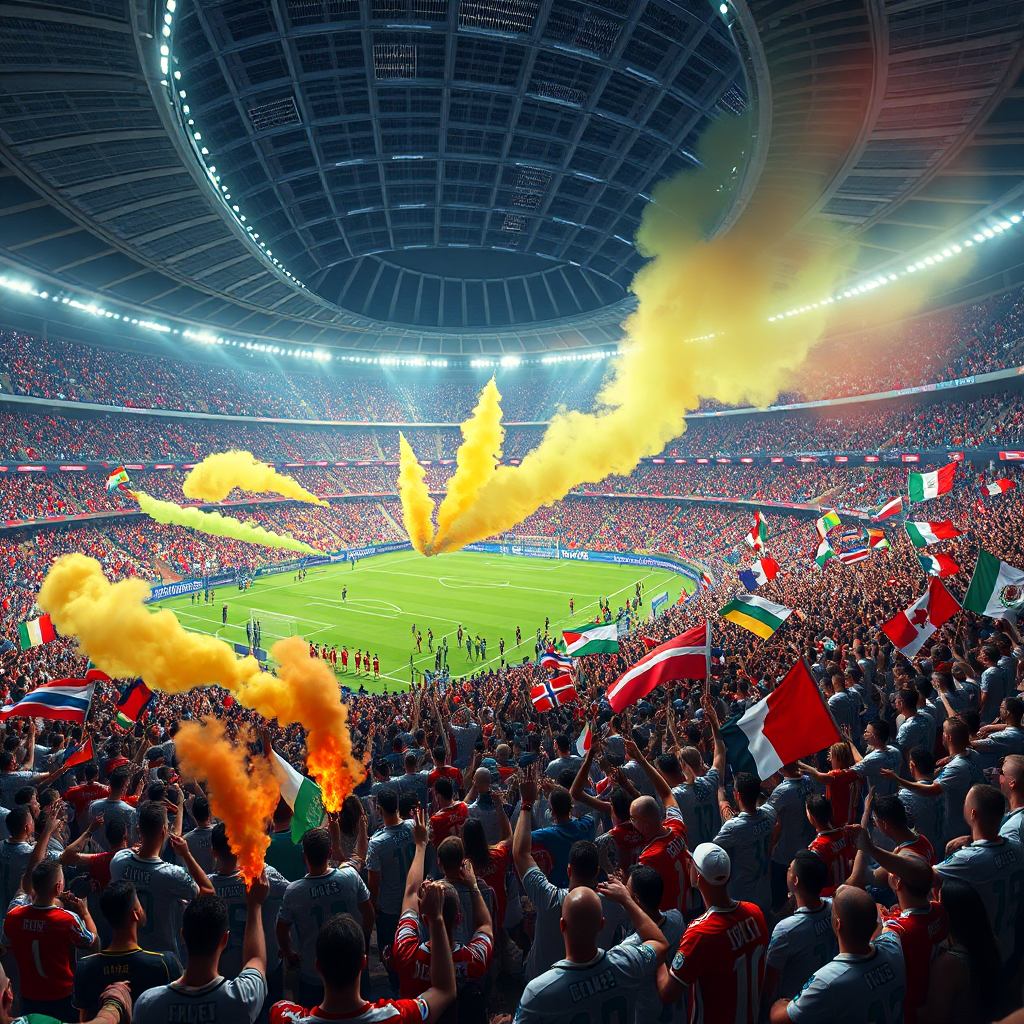
The Evolution of Extra Time and Penalty Shootouts: A UX Analysis of Knockout Tournament History
The story of how knockout tournaments resolve drawn matches is not just a timeline of rule changes—it is a study in competing pressures: fairness vs. spectacle, endurance vs. precision, tradition vs. television schedules. After reviewing more than a century of knockout history through the lens of user experience (players, fans, broadcasters, and organisers), three findings stand out. First, extra time was conceived as a natural extension of the game, but it often degrades the quality of play because fatigue erodes technique. Second, penalty shootouts were a pragmatic invention to replace endless replays, yet they introduce a separate set of psychological burdens that shift the competitive logic. Third, the most significant inconvenience for modern audiences is the prolonged uncertainty of extra time, which conflicts with broadcast windows and viewer attention spans. These realities shape who benefits from each system—and who is left frustrated.
Evaluating Extra Time and Penalty Shootouts: A Criteria-Based Comparison
To understand which format works best in a given context, we must judge both interventions on the same dimensions. The table below summarises the four most important user-experience criteria for knockout tournament design.
| Criterion | Extra Time (30 min) | Penalty Shootout |
|---|---|---|
| Fairness | Moderate – allows more time for skill to decide, but fatigue favours the fitter side | Low – one-on-one duels reduce the team game to a lottery; luck often outweighs skill |
| Drama / Entertainment | Moderate to high – goals are rare but decisive; tension builds slowly | Extremely high – each kick is a sudden-death moment; peaks come in rapid succession |
| Player Fatigue & Injury Risk | Severe – 30 more minutes after 90 increases injury likelihood and affects subsequent matches | Low – except for goalkeepers, physical exertion is minimal |
| Viewer Engagement & Broadcast Fit | Declines after the first 15 minutes; uncertain end time makes scheduling difficult | Peaks at every kick; predictable maximum duration (~15 min) suits TV slots |
 Hình minh hoạ: sun win
How Each Criterion Plays Out in Practice
Fairness: The Heart of the Debate
Extra time preserves the fundamental nature of football as a team sport. Players can still pass, press, and attack as a unit. However, after 90 minutes of running, technical ability declines. The fitter, deeper squad gains an advantage that has little to do with footballing quality. Penalty shootouts strip away teamwork entirely. In one sharp moment, a player who has not touched the ball for 30 minutes must score under extreme pressure. The sun win—the final victory—is often decided more by nerve and luck than by which team played better. This trade-off is the single biggest source of criticism for penalty shootouts.
Drama and Emotional Arc
From a UX perspective, penalty shootouts deliver a concentrated emotional spike. The viewer experiences a series of mini-climaxes. Extra time, by contrast, offers a gradual ascent that can fizzle if no goals are scored. The longest goalless extra-time periods are notorious for draining excitement. Yet when a goal does come in the 118th minute, the catharsis is arguably purer than any penalty victory. The choice between a slow burn and a rapid-fire ending depends on what kind of experience the tournament wants to provide.
Player Welfare and Tournament Scheduling
Tournaments that cram multiple matches into a short window—such as the World Cup knockout stage—must consider recovery. Extra time forces players to exert themselves for a full half-match more, which increases muscle fatigue and the likelihood of injury in the next round. Penalty shootouts, while mentally brutal, spare the body. For leagues with congested calendars, shootouts are the more sustainable option. For competitions that prize the purity of the game, extra time remains the preferred route, but at a cost to player longevity.
Broadcaster and Fan Convenience
Television networks have a clear preference: penalty shootouts. A shootout fits neatly into a schedule, whereas extra time can push programming into overrun. For fans watching at home, the same uncertainty creates friction—a late-night extra-time period may force them to choose between sleep and the end of the match. In the stadium, however, extra time is often seen as better value: more football for the ticket price. The inconvenience is asymmetrical between the live audience and the remote viewer, which creates tension when tournaments try to serve both groups.

Strengths and Limitations of the Two Systems
The most frequently praised strength of extra time is that it stays true to the original sport. It rewards endurance and collective strategy. Its main limitation is that tired players produce poor football: the extra period often becomes a war of attrition rather than a display of skill. Penalty shootouts, meanwhile, are fast and decisive. Their limitation is the perception of unfairness. Many fans and players feel that a tournament should not be decided by a one-on-one test that bears little resemblance to the match that preceded it. Neither system is superior in absolute terms; each is a compromise.
Who Should Consider Extra Time—and Who Should Avoid It
Extra time suits competitions where squad depth is deep and recovery time between matches is generous. It also works well in single-match finals where the occasion can justify the additional strain. Conversely, leagues with fast turnaround times (e.g., domestic cup competitions during a winter schedule) should avoid extra time. Youth tournaments, where players’ bodies are still developing, also lean toward shootouts or other tied-match resolutions. For organisers who value broadcast reliability above all, penalty shootouts are the safer bet—but they will alienate purists who believe a football match should not end on a ‘lottery’.
For fans who follow the betting markets, the unpredictability of penalty shootouts adds another layer of engagement. The rise of tài xỉu online reflects how the volatility of shootouts creates micro-markets that are independent of the preceding 120 minutes. Spectators who enjoy quick, high-stakes decisions may prefer tournaments that use penalties; those who savour tactical chess matches find extra time more rewarding.
Checklist Before Adopting a Tied-Match Resolution Rule
- Evaluate the tournament schedule: How much recovery time do teams have between rounds? If matches occur every three days, shootouts reduce injury risk.
- Assess the audience: Is the primary broadcast market primetime or late night? Extra time can clash with major time-zone windows.
- Consider historical identity: Traditional cup competitions may face backlash if they switch to shootouts without extra time first.
- Plan for player welfare: Consult medical staff about the expected physical toll of 30 additional minutes.
- Communicate the rules clearly: Fans, media, and players should know the exact procedure well before the tournament begins.
- Test alternatives: Systems like “away goals” or the “golden goal” have been tried; compare their user-experience data with extra time and penalties.
Frequently Asked Questions
Why were penalty shootouts introduced in the first place?
Penalty shootouts replaced drawn-match replays, which were logistically difficult and unpopular with players and fans. The first major tournament to use them was the 1970 FIFA World Cup qualifiers, though the rule became standard in the late 1970s.
Has extra time always been 30 minutes?
No. Early rules used various lengths. The 30-minute format (two equal halves of 15 minutes) was standardised by FIFA in 1923. Some competitions have used variations like the “golden goal” (sudden death) within extra time, which was abolished in 2004.
Do penalty shootouts favour the team that goes first?
Statistical evidence shows a slight bias: the team that kicks first wins approximately 60% of shootouts. This psychological advantage is well-documented and is a frequently cited inconvenience in the current rule.
Are there any proposals to change the current system?
Yes. The Alternative Football Association and some researchers have suggested a “shootout format” that alternates kick order more aggressively or uses a “ABBA” sequence. Others propose reducing extra time to 15 minutes or eliminating it entirely in favour of more direct shootout formats.
How do other sports handle tied knockout matches?
Basketball uses overtime periods of 5 minutes, with regular rules. Hockey uses sudden-death overtime followed by a shootout. Tennis and American football have tiebreaks. Each sport’s solution reflects its own balance of endurance, scoring frequency, and broadcasting needs.
Risks to Remember When Choosing Between Extra Time and Penalties
Every knockout tournament that employs one or both systems accepts certain downsides. With extra time, the most material risk is player burnout and subsequent injury, which can affect the entire competition’s quality and integrity. With penalty shootouts, the risk is a perceived lack of legitimacy—fans may feel that the “better” team lost unfairly, which can diminish the tournament’s credibility over time. There is also the risk of anti-climax: a team that defended for 30 minutes and then loses on penalties can leave a bitter taste. For broadcasters, the financial risk of extra time is overrun, while for organisers, the risk of a shootout is public outcry. No single solution is risk-free. The wise approach is to match the resolution method to the tournament’s specific constraints and the expectations of its audience, acknowledging that every choice comes with trade-offs that cannot be eliminated—only managed.